Medina Azahara is a legendary city dating back over a thousand years. A visit to its ruins, just a few kilometers from the Caliphal city of Córdoba (Andalusia), is enough to sense the beauty, elegance, and power of its fallen arches.
This musical piece is inspired by the qaṣīda I Remenbered You at al-Zahrāʾ by the Cordoban poet Ibn Zaydun (Córdoba, 1003 – Seville, 1071), a delicate love poem composed in the basīt metre, in which the author evokes memories shared with his beloved Wallāda bint al-Mustakfī (Córdoba, 1010-1091) at Madīnat al-Zahrāʾ.
All things awakened in us the memory
of our longing for you,
from which the heart could not escape, however it tightened.
May God grant no rest
to one who betrays your memory
and does not beat the trembling wings of desire.
Today I praise myself for having remained faithful to your pact:
you forgot
and we remained lovers.
[Selected verses as a song to poetry within the musical composition]
© Introductory note and poem translation: Prof. Dr. Mohammed Dahiri, Complutense University of Madrid
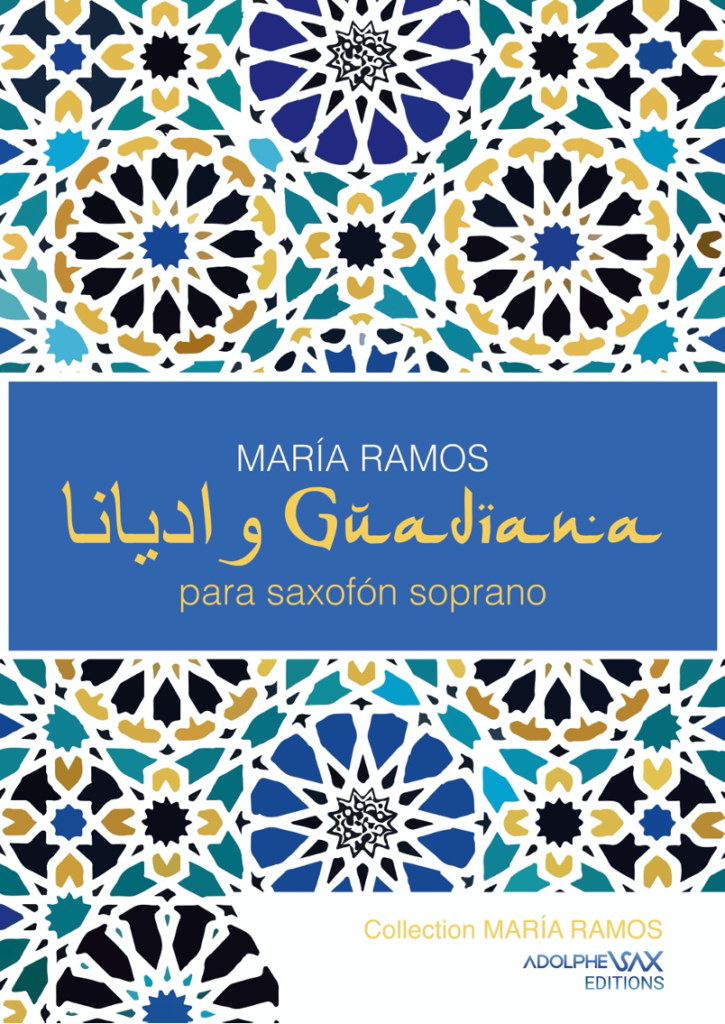
Guadiana is a piece for soprano saxophone solo based on the rhythms and folklore from Andalusia (Spain). Although it is not a flamenco piece, there is a certain spirit that reminds us of the Andalusian art.
This piece is inspired by Guadiana, which is a river in the Iberian Peninsula. It is considered the fourth longest river in the Peninsula and runs through Spain and Portugal.
The name Guadiana has its etymological origin in Arabic (Wadi Ana or valley of Ana’s river), adapting the Flumen Anas from the Roman Hispania.
Originally, the pre-Roman inhabitants would have called it “Ana” river (probably “river of ducks”), while in the Arabian countries it is currently known as “Nahr Yana”.
MARÍA RAMOS
“Les folies d’Espagne” by Marin Marais are composed in a magnificent as well as elegant way. The composer shows a wide timbral palette by creating a singular three-dimensional sound.
Belonging to the second volume of ‘Viola pieces’ published in 1701, Marin Marais declares as follows:
These pieces are written in a different way from the ones of the first volume. I have taken great care when composing them so that they can be played by all types of instruments, such as the organ, the harpsichord, the lute, the violin and the flute. I dare to state that this plan has been successful since I have played them with the last two instruments. [...] The bass is quite melodic, which will greatly facilitate the task of anyone who takes the trouble to adapt it to each instrument in particular.
Having said this, I am adapting this piece to solo saxophone with the aim of showing not only an honest respect for Marin Marais’ original version, but also a true example of the instrumental ingenuity that the saxophone offers us as a modern instrument.
MARÍA RAMOS
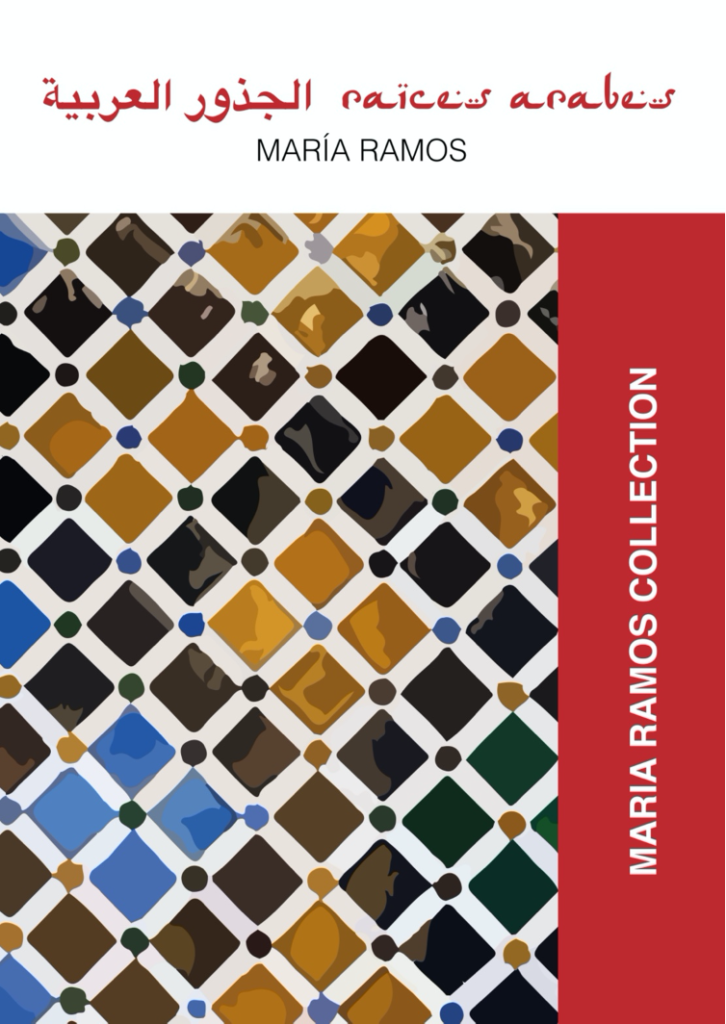
Raíces árabes draws its inspiration from the opening lines of “Adelfos” by Manuel Machado, a poem dedicated to Miguel de Unamuno in 1899, when the poet was only twenty-five years old.
Throughout his work, Manuel Machado sought, with an almost obsessive yearning, “the man” – the man of clear, sincere verses who dwelled within him.
As the piece unfolds, the poem is recited in Arabic, evoking the enduring traces of these inherited roots.
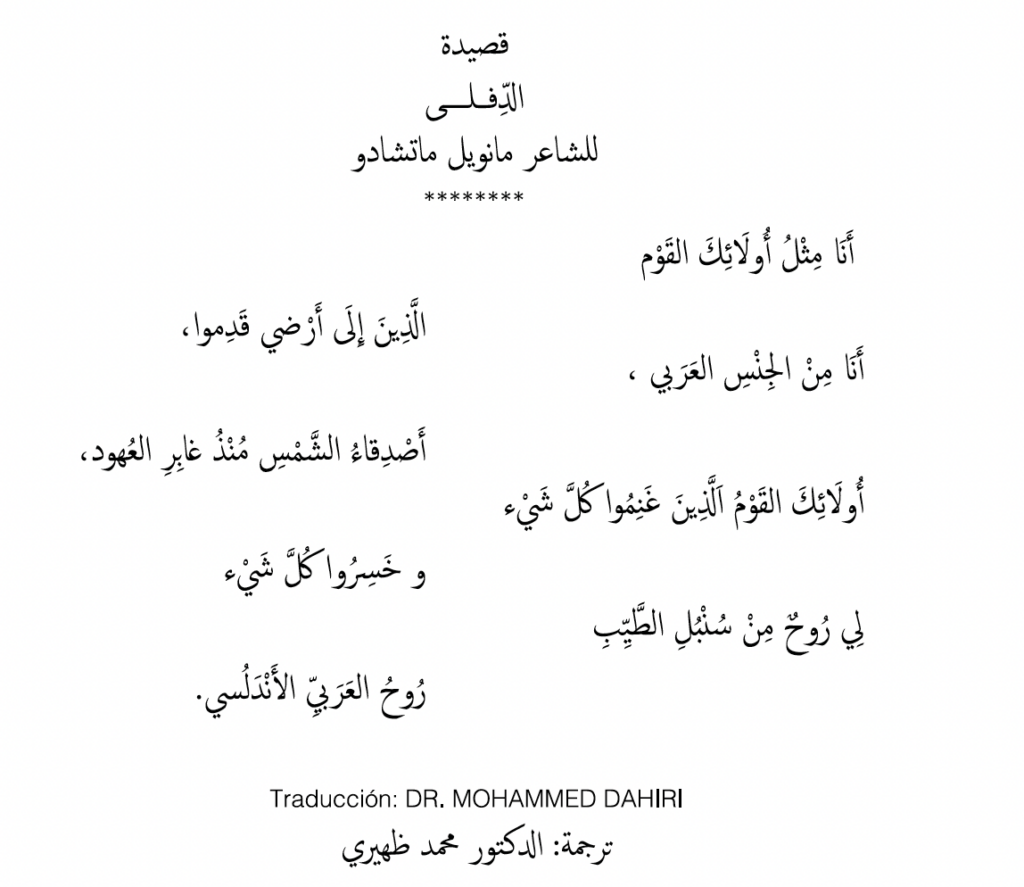
I am like the men who came to my land
I am from the Moorish race, old friend of the sun
Men who won and lost it all
My soul is like the nard of the Arabic Spaniard

[Selected verses in the musical composition]
© Poem translation and recitation: Prof. Dr. Mohammed Dahiri, Complutense University of Madrid.
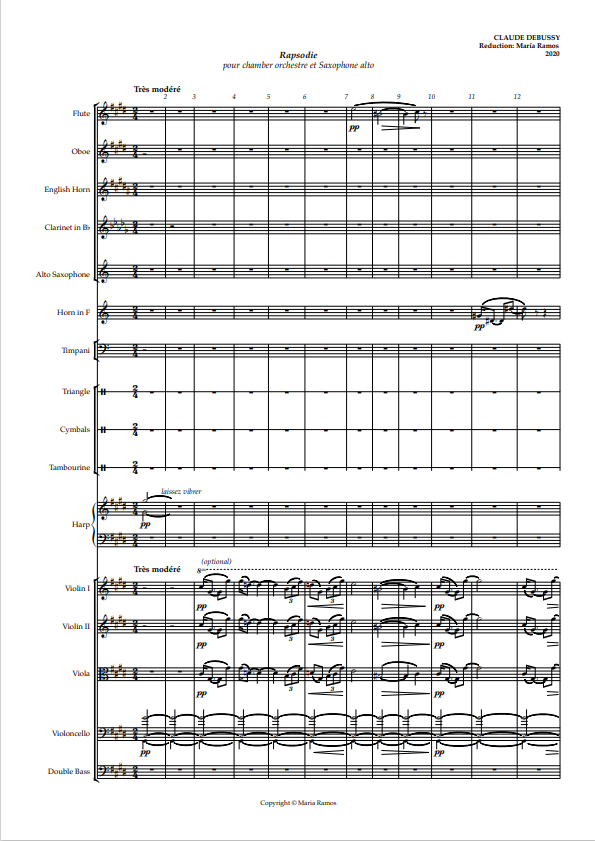
Rapsodie by Claude Debussy for chamber orchestra and alto saxophone
In 1901, Debussy was commissioned to write a work for saxophone and orchestra by Elizabeth Boyer Coolidge (1853–1924), commonly known as Elise Hall.
Elise Hall may have been an amateur musician, but she marked a turning point in the development of the Impressionist saxophone repertoire through the commissioning of numerous works of great significance for the instrument.
The Rapsodie is undoubtedly one of the clearest examples of Impressionism in the saxophone repertoire. The use of exotic and eastern scales, combined with the rich palette of colours characteristic of the Impressionist aesthetic, makes this work a remarkable example of musical craftsmanship.
The aim of this orchestral reduction is to preserve, as rigorously and faithfully as possible, the musical essence of Debussy’s original work, while offering the soloist greater opportunities to perform the piece with a chamber orchestra.
MARÍA RAMOS
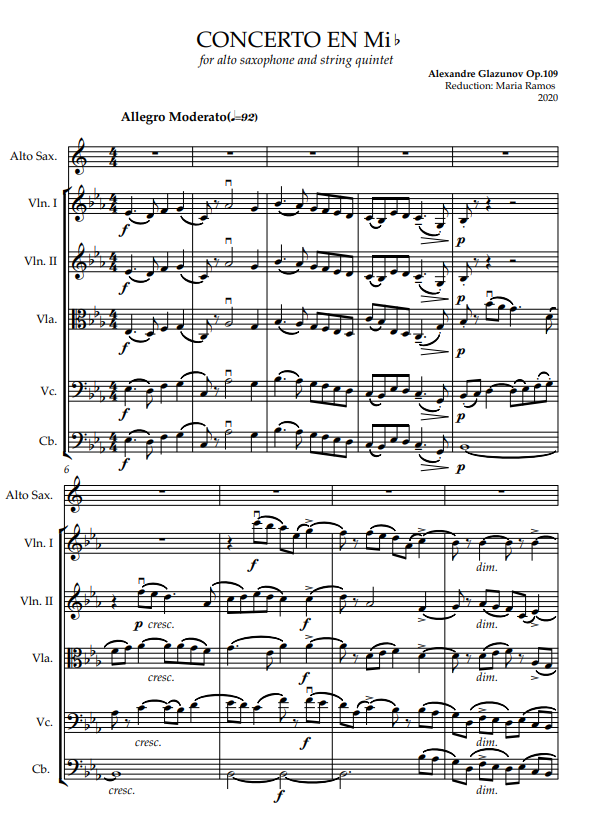
Concerto in Eb by Alexander Glazunov for alto saxophone and string quintet
Alexander Glazunov’s (1865–1936) Concerto in E-flat Major for alto saxophone and orchestra is one of the most representative works in the classical repertoire for the instrument.
The great variety of timbres and dynamic contrasts that the saxophone, as a modern instrument, offers made a strong impression on Glazunov, who went on to compose two works for the instrument: the Saxophone Quartet in B-flat Major (1932) and the Concerto in E-flat Major, Op. 109 (1934), the latter dedicated to the German saxophonist Sigurd Raschèr.
The aim of this orchestral reduction is to preserve, as rigorously and faithfully as possible, the musical essence of Glazunov’s work, while offering the soloist the opportunity to perform the piece in a reduced version.
MARÍA RAMOS